

Nestled among Rochester’s rolling hills and wooded valleys lies Meadow Brook Hall, the storied Tudor-revival estate and National Historic Landmark that was the dream of Matilda Dodge Wilson, widow of automotive pioneer John Dodge, and her second husband, Alfred Wilson. Meadow Brook Hall first opened its gates 96 years ago.
Designed by architect William Kapp of Detroit’s Smith, Hinchman & Grylls, the mansion reflected the Wilsons’ deep love for architecture and their travels through Great Britain.
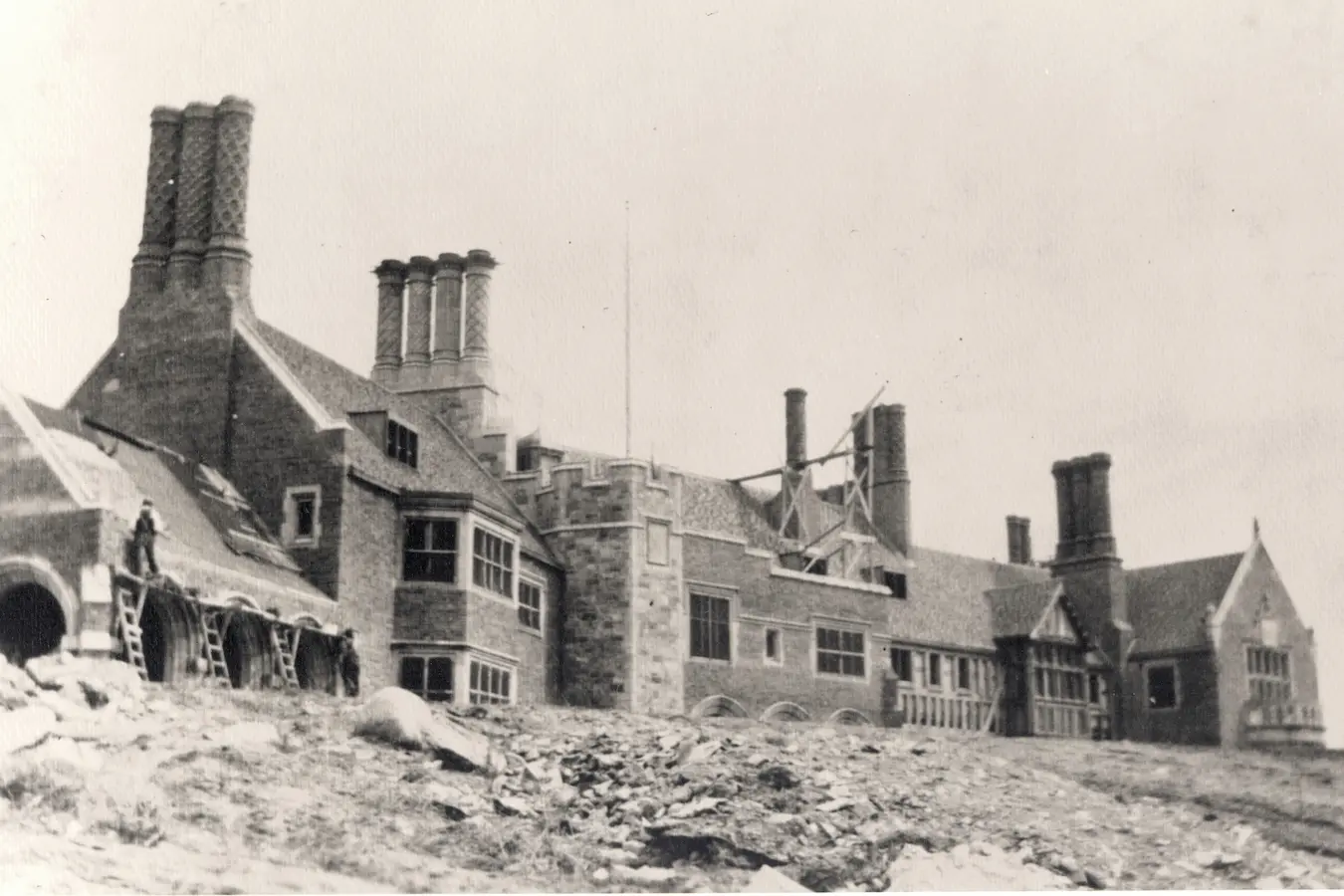
The design incorporated elements from English manor homes, with intricate woodwork, hand-carved details, leaded glass, all at a grand scale. The three-year construction took place in almost total secrecy; the Wilsons requested no photographs or press coverage to maintain their privacy and surprise the community.
Meadow Brook Hall opened its gates in the fall of 1929 with a housewarming party of epic proportions. Despite inviting 400 guests, about 850 people arrived. After the party crashers finished all the food, they ate the decorative fruit centerpieces!
Planning for The Great Estate
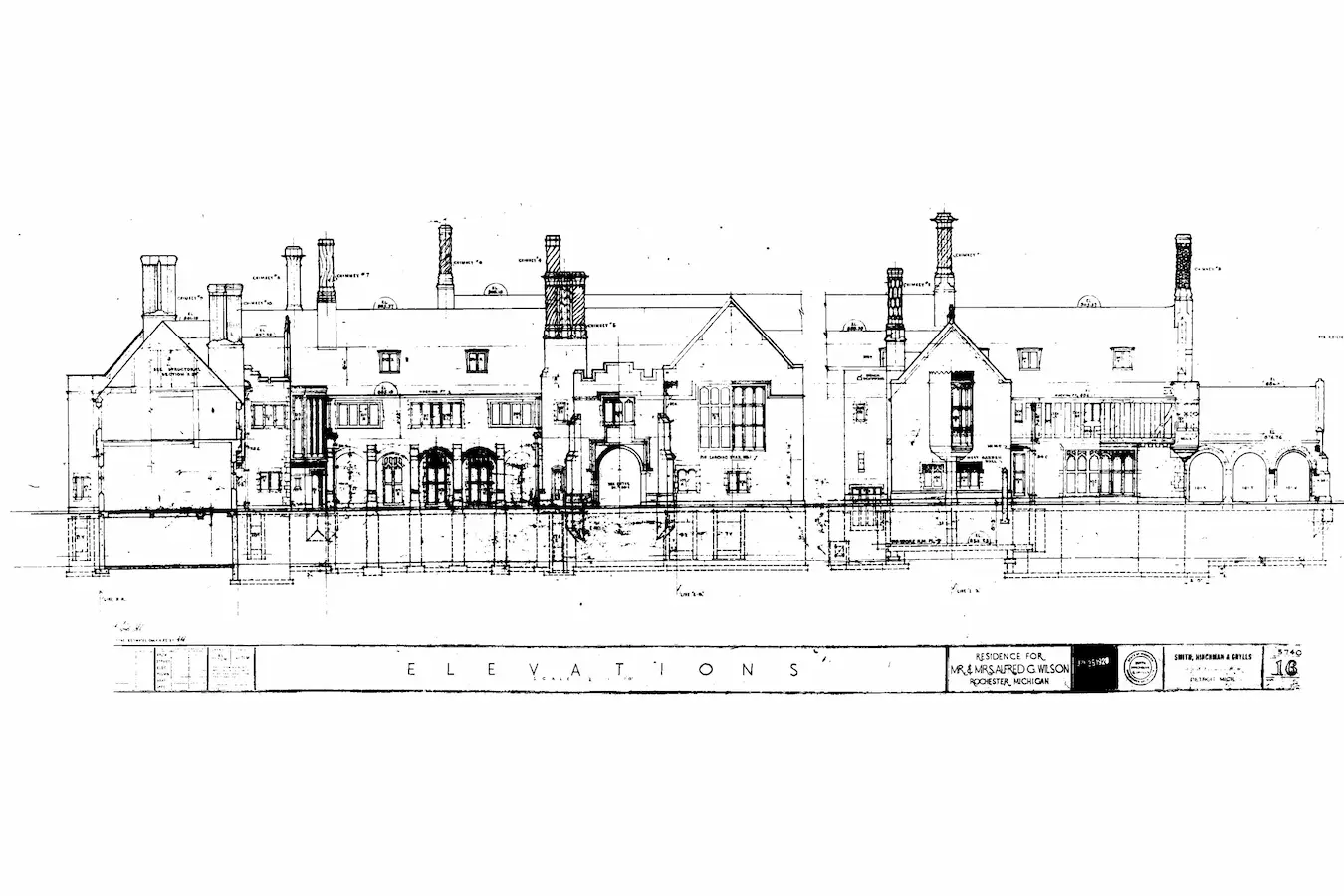
One can hardly blame them for wanting to see the Great Estate. Meadow Brook encompasses an astonishing 110 rooms—including 24 fireplaces with 39 uniquely designed chimneys, 23 bedrooms and 25 bathrooms, all set within a 1,400-acre estate.
The planning for Meadow Brook Hall was meticulous and Matilda was involved in nearly every aspect of it, from choosing the switch plate covers to designing the Grand Staircase. She told the architect that she wanted a home suitable to host parties for over 250, seated dinners for 40 and comfortable living space for a family of four.
Standing at a grand 88,000 square feet, Meadow Brook Hall is an architectural marvel, lovingly preserved and boasting a collection of more than 75,000 historic artifacts—including original paintings, sculptures, furniture, ceramics, silver, costumes, textiles and even Tiffany art glass.
Meadow Brook is the fourth largest historic home in the United States, and is nearly twice as large as the White House. It stands alongside the most impressive buildings in the state, including the Michigan Capitol Building in Lansing and Grand Hotel on Mackinac Island.
Constructing a Landmark

Meadow Brook was constructed between 1926 and 1929 and cost about $4 million. To add up all of the materials, furnishings, artifacts and artwork today — it would be priceless.
Matilda and Alfred envisioned an American estate with a sense of timelessness, as if it had stood for centuries, even though they were essentially starting anew with 400,000 bricks!
While they could have easily purchased entire rooms or antique furnishings from Europe, they consciously chose to prioritize American craftsmen and materials, although practicality and cost savings also played a role in some of these decisions. The organ, elevator, and 70% of the windows in Meadow Brook Hall were all repurposed from the unfinished 50,000 square foot Dodge Lakeshore Mansion that Matilda and John Dodge had started in Gross Pointe.
Construction was a massive undertaking. Imagine a single steam shovel excavating for months to prepare the foundation – a foundation that would stretch an impressive 470 feet in length.
This monumental project required architects, landscape designers and construction firms subcontracting with 132 different trades. Nearly 100 workers, including engineers, masons, carpenters, laborers, and even a watchman, worked here six days a week.
Today, Meadow Brook Hall invites the community to explore its storied past, celebrate its rich history, and be inspired by the enduring beauty of Michigan’s “Castle.” Meadow Brook Hall is open for public touring year-round, with the dazzling Holidays at Meadow Brook kicking off on Friday, Nov. 28.
See meadow brook’s timeline